How I Test X Growth Tools: Method and Scoring Scale (2026)
How I test X growth tools: a test account, every feature used, nothing published, prices dated, and a score out of 10 on five weighted criteria.
I test every X tool the same way: I use it on a test X account, I publish nothing, I date the prices I read, and I score it out of 10 on five weighted criteria. I am Sébastien Ego, founder of Shadowban Radar. This page explains each step, so you can judge a score before trusting it.
How do I test an X tool?
I test every X growth tool in the same seven steps, as far as its plan or trial lets me go:
- I create an account on the tool's official site, on the plan or trial it offers.
- I connect it to a test X account that belongs to Shadowban Radar.
- I use every feature I can reach: onboarding, writing, scheduling, replies, analytics and settings.
- I publish nothing during the test. Every draft stays a draft.
- I time each AI task and note the credits it uses, as the app shows them.
- I capture the screens I describe in the review.
- I read the prices on the official pricing page and write down the date.
A test happens on one day, in one browser, so the review can state what I saw and when.
What if a feature is locked behind a paid plan?
Free, no login, results in seconds.
When an X tool locks a feature behind a paid plan, I say so in the review. Some features only open once a paid plan starts. The article then names the locked features and says what I relied on instead: the tool's own pages and published tests from other reviewers. I never present a locked feature as something I used.
How is the score calculated?
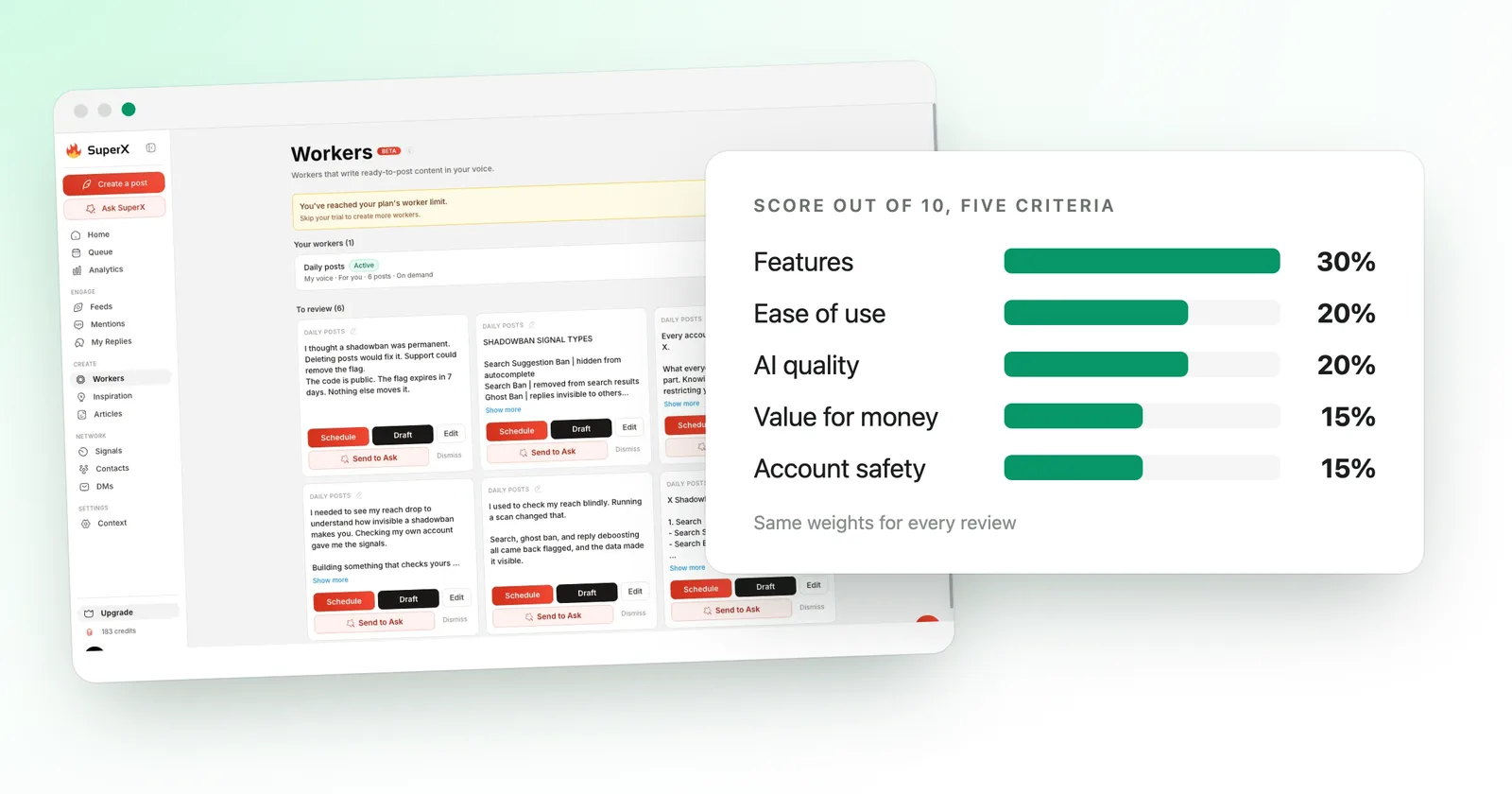
The score of an X tool review is a weighted average of five criteria, out of 10, rounded to one decimal. The weights do not change from one review to the next.
| Criterion | Weight | What I look at |
|---|---|---|
| Features | 30% | What the tool covers, and how deep each feature goes |
| Ease of use | 20% | Setup time, clarity of the screens, how fast I reach a result |
| AI quality | 20% | How useful the AI drafts and analysis are, how long they take |
| Value for money | 15% | What the price includes, trial terms, limits on each plan |
| Account safety | 15% | Whether the tool waits for your approval and warns you about risk |
A tool that scores 9.5 on features, 8.5 on ease of use, 8 on AI quality, 8.5 on value and 9 on safety lands at 8.8 out of 10.
How do I check prices and facts?
I read prices on the tool's official page and put the date next to them. A price in a review is the price I saw that day, never a figure copied from another site.
I describe a tool by what its own pages announce and by what I saw in my test. I do not reuse the results of competitors of Shadowban Radar.
How do I update a review?
Every review shows an updated date at the top, and when I update a review, I read the prices and the trial terms again on the official page.
If a tool changes in a way that matters, I test the changed part again and adjust the score. The article then says what changed and why. A price that moves without a change to the tool alters the value score, not the others.
Do partners get a better score?
No, partners do not get a better score. Shadowban Radar earns a commission on some of the tools I review, but the commission does not change the score. I set the score from the test, with the same table for every tool.
Every review lists cons, including for partners. How the site earns money is explained in how Shadowban Radar makes money.
Where can I see the tests?
These reviews follow the method above:
To compare the tools side by side, read the best X growth tools or superX vs Tweet Hunter.
To check your own account's reach, run the free Twitter (X) shadowban test. Terms such as shadowban or reply deboosting are defined in the X shadowban glossary.